


Last Updated: March 29, 2026
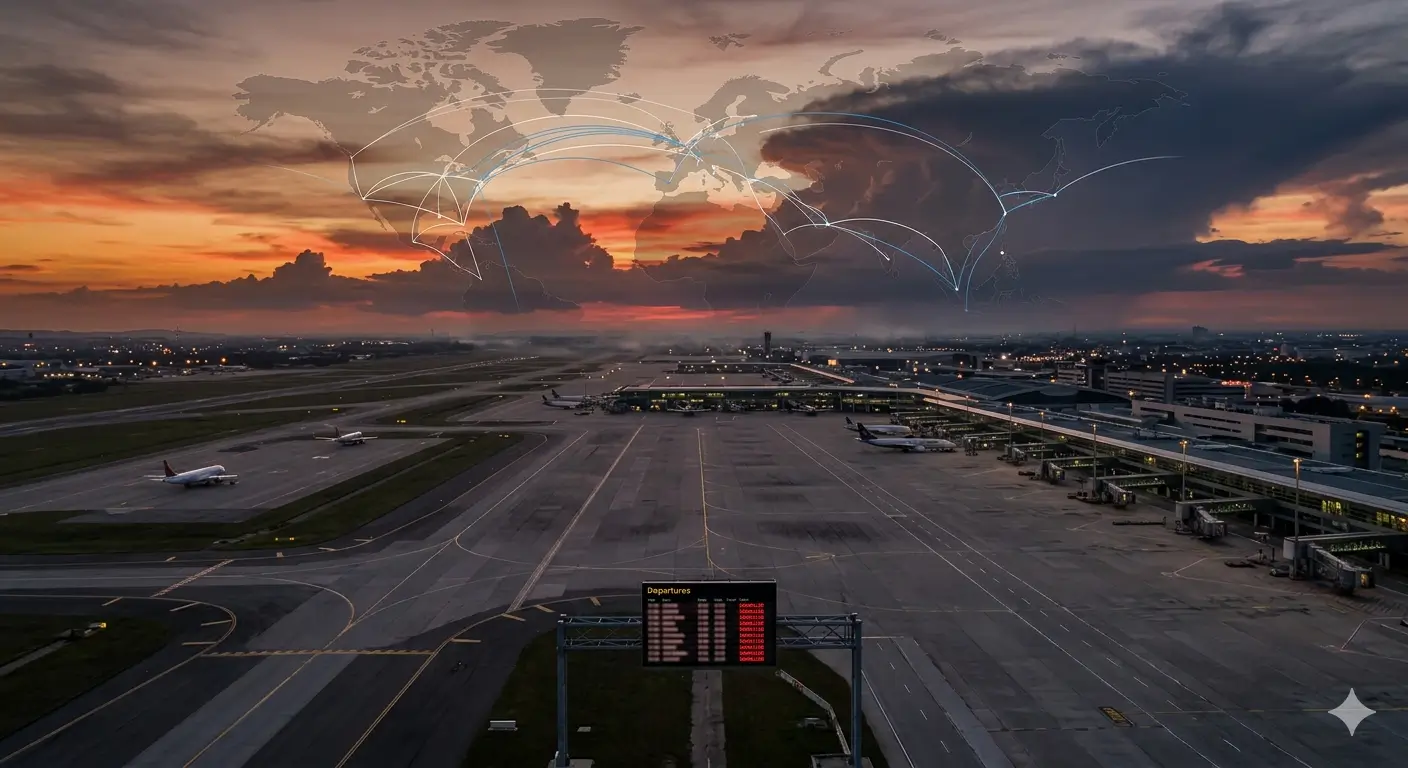
There’s a particular kind of dread that settles over a traveler staring at a departures board full of red. Cancelled. Cancelled. Delayed indefinitely. Cancelled. For hundreds of thousands of passengers across the globe right now, that experience isn’t hypothetical — it’s their reality. The escalating conflict in the Middle East has triggered one of the most sweeping aviation crises since the COVID-19 pandemic, shutting down major hubs, obliterating long-established flight routes, and sending shockwaves through every corner of the global travel industry.
Whether you’re planning a trip to Southeast Asia, connecting through Dubai, or simply flying domestically and wondering why your airline suddenly can’t find a crew — this crisis is touching you. The current situation demands attention, preparation, and a healthy dose of flexibility.
This article breaks down everything you need to know about the global travel disruptions 2026, including which airports are closed, which flight routes are affected, what the latest travel advisories say, and — most importantly — what you can do about it.
Table of Contents
- How the Middle East Conflict Became a Global Aviation Crisis
- The “Bridge in the Sky”: Why This Region Matters So Much to Aviation
- Airport Status: Which Hubs Are Closed, Limited, or Operating Normally
- Flight Route Disruptions: What’s Changed for Long-Haul Travelers
- Airline-by-Airline Breakdown: Who’s Flying and Who Isn’t
- Travel Advisories and Government Warnings
- The Ripple Effect: How This Affects You Even If You’re Not Going to the Middle East
- Practical Tips for Travelers Right Now
- FAQ
- Conclusion
How the Middle East Conflict Became a Global Aviation Crisis
The crisis didn’t happen overnight, but its aviation impact was nearly instantaneous. When military strikes escalated in late February 2026, the response from civil aviation authorities across the region was swift and, in many cases, total. Airspace closures swept across Iran, Iraq, Syria, Israel, Qatar, Kuwait, Bahrain, and parts of the UAE and Saudi Arabia. At the peak of the disruptions, flight tracking sites showed vast empty corridors where hundreds of flights would normally cross, with over 2,800 cancellations recorded in a single day.
According to data from Flightradar24, some 21,300 flights were cancelled at seven major airports — including Dubai, Doha, and Abu Dhabi — since the strikes began. To put that in perspective, that’s more than some airports handle in an entire year.
Paul Charles, CEO of luxury travel consultancy PC Agency, described it bluntly: “It’s pretty well the biggest shutdown we’ve seen certainly since the COVID pandemic,” adding that beyond passenger disruption, the cargo impact alone would run to “billions of dollars.”
This isn’t merely a regional story. It’s a global one — and if you have any travel plans in the coming weeks or months, it directly concerns you.
The “Bridge in the Sky”: Why This Region Matters So Much to Aviation
To understand the scale of the disruption, you first need to appreciate just how central Middle Eastern airspace is to the modern aviation network. Think of it less as a region you fly to and more as a region you fly through.
For decades, Europe-to-Asia traffic has flowed straight through the Middle East. The region is home to some of aviation’s most powerful megahubs — Dubai International Airport, Hamad International Airport, and Zayed International Airport — and to carriers such as Emirates, Qatar Airways, and Etihad Airways, whose entire business models are built on connecting East and West.
Aviation consultant Tony Stanton described it well: Middle Eastern airspace functions as “a high-capacity bridge” between Europe and Asia. “When that bridge collapses, or the bridge closes, the traffic doesn’t largely disappear,” he explained. “It tends to funnel either north or south into those two main corridors, and then what we see is those two corridors become very congested because they’re narrow corridors.”
The result? Longer flight times, more fuel burned, crew and aircraft displacements, and a domino effect of delays that plays out for days — sometimes weeks — after the initial disruption.
Industry analyst Henry Harteveldt put the stakes plainly: “Emirates, the largest of the three, operates the largest international hub of any airline. The suspension of airline service at Abu Dhabi, Doha, and Dubai will not only disrupt travel to and from those cities, but will make it difficult for people in North America to travel to and from the Indian subcontinent, Africa, and Asia/Pacific. It will also disrupt travel for people living in those regions to Europe and the Americas.”
Airport Status: Which Hubs Are Closed, Limited, or Operating Normally
This is what most travelers need most urgently: the ground truth on airport operations. Keep in mind that the situation remains highly fluid — airports can shift status with little warning.
Airports Operating on Limited Capacity
Dubai International Airport (DXB) — UAE Dubai International has resumed partial operations, but cancellations continue on high-demand routes. The airport is processing an estimated 200–210 flights per day compared to its normal capacity of over 1,200 — an 83% reduction from normal operations. Emirates and flydubai are running scaled-down networks, primarily focused on repatriation.
Abu Dhabi’s Zayed International Airport (AUH) — UAE Abu Dhabi’s Zayed International Airport has resumed limited operations amid ongoing regional tensions. One person was killed and four others injured in a drone strike on the airport earlier in March, making many passengers and airlines understandably cautious about transiting here.
Rafic Hariri International Airport (BEY) — Beirut, Lebanon Technically open but facing frequent disruptions and cancellations due to regional tensions. Middle East Airlines continues limited services, though security risks and nearby military activity affect reliability.
Riyadh (RUH) and Jeddah (JED) — Saudi Arabia King Khalid International Airport in Riyadh has reported 13 cancellations and 52 delays, while King Fahd International Airport in Dammam recorded 8 cancellations and 19 delays. Services continue but at reduced frequency.
Airports Effectively Closed
Kuwait International Airport (KWI) Kuwait International Airport remains the only fully closed commercial airport in the Middle East as of late March 2026, with no commercial flights operating. Essential and governmental flights may be occurring on a case-by-case basis.
Bahrain International Airport (BAH) Bahrain International Airport has been the hardest-hit single airport in recent days, reporting 91 cancellations. Flights are largely suspended or diverted due to airspace closure. Operations remain minimal with ongoing restrictions.
Imam Khomeini International Airport (IKA) — Tehran, Iran Largely closed or non-operational for civilian international flights amid the conflict. Airspace restrictions remain tight, with minimal activity reported.
Airports Operating with Caution
Hamad International Airport (DOH) — Doha, Qatar Numerous flights were suspended when Qatari airspace temporarily closed. Airlines are advising passengers to confirm flight status before traveling to DOH. Qatar Airways remains significantly constrained.
Muscat International Airport (MCT) — Oman Oman has emerged as something of a lifeline hub. Muscat continues to serve as the primary staging hub for repositioning and evacuation flights. If you’re trying to move through the region, Oman is currently your best bet for a relatively stable transit point.
Flight Route Disruptions: What’s Changed for Long-Haul Travelers
The most dramatic — and least visible — consequence of this crisis is what’s happening to long-haul flight routes that don’t even touch the Middle East as a destination.
Routes between Europe and South Asia, Southeast Asia, East Africa, and Australia have been particularly disrupted. Airlines traveling between Europe, Asia, Africa, and Australia often route aircraft across Middle Eastern airspace. When these corridors close, flights must detour hundreds or even thousands of miles around restricted zones.
Those detours come with real consequences: longer flight times, additional fuel stops in some cases, crew rest complications, and — inevitably — higher ticket costs. Benchmark crude oil is up roughly 30% so far this year, threatening to lift jet fuel costs and squeeze airline profits. Those costs won’t stay hidden on airline balance sheets forever. Travelers can expect to see them reflected in fares over the coming months.
One of the operational knock-on effects that passengers may not immediately consider: crew members and aircraft are stuck in affected regions. “You could be anywhere around the world, and you will likely be affected by what’s going on at the moment,” says aviation consultant Tony Stanton. “An aircraft that currently is sitting in London — in the system the airline might have anticipated that being in Singapore or Brisbane or some other place.”
Airline-by-Airline Breakdown: Who’s Flying and Who Isn’t
Airlines have been scrambling to communicate clearly with passengers, but the picture changes daily. Here’s the current situation with major carriers:
- Emirates: Gradually increasing flights from Dubai but operating well below normal capacity. Focused primarily on repatriation routes.
- Qatar Airways: Significantly limited by restricted airspace access, with many routes suspended or heavily delayed.
- Etihad Airways: Operating a reduced schedule, largely focused on essential and evacuation movements.
- British Airways: Cancellations to Amman, Bahrain, Dubai, and Tel Aviv now extend through the end of May.
- Lufthansa, Air France: Major global carriers including Lufthansa and Air France have extended suspensions to affected destinations well into April or beyond.
- Virgin Atlantic: One of the early positive signals — Virgin Atlantic announced it would resume services between London Heathrow and Dubai and Riyadh as conditions allowed.
- Gulf Air: Has extended its temporary flight operations from Saudi Arabia’s Eastern Province, maintaining connections to several major global cities until at least April 2026.
The general advice from every carrier right now is the same: do not go to an airport without confirmed, airline-verified booking status. Check your flight, then check it again 24 hours before departure.
Travel Advisories and Government Warnings
Governments around the world have updated their travel advisories, and the language being used is unambiguous. This is not a “exercise caution” situation for much of the region — it’s a “do not travel” zone for several countries.
The U.S. Department of State formally issued a critical global travel and security advisory on March 22, 2026, advising all citizens abroad to exercise extreme caution, citing disruptions in Middle Eastern airspace and credible threats to U.S. diplomatic facilities.
The U.S. Embassy in Manama, Bahrain has suspended consular services, meaning visa processing, passport services, and standard consular assistance are currently unavailable until further notice.
Australia’s Smartraveller advisory notes that airports, hotels, roads, bridges, and other locations have been struck with missiles. “Airspace may close at short notice. Flights can change or stop suddenly. Borders can close. If you travel to or transit through a ‘Do not travel’ country, you may be unable to leave.”
For travelers from any country, the key action is to locate your government’s official travel advisory portal and register your travel plans if you’re in the region:
- USA: travel.state.gov
- UK: gov.uk/foreign-travel-advice
- Australia: smartraveller.gov.au
- Canada: travel.gc.ca
- EU citizens: check your relevant national foreign ministry website
The Ripple Effect: How This Affects You Even If You’re Not Going to the Middle East
This is the part that catches many travelers off guard. You don’t need to be flying anywhere near the region for your plans to be disrupted.
There are also global fuel supply challenges, with many countries introducing fuel restrictions and local measures to preserve fuel supplies. If you travel overseas, your plans may be impacted — there may be delays or cancellations to flights and local transport, changes in availability of food, water, and medicines, venue closures, or impacts on essential services.
Think about it from the airline’s perspective. A plane that should be in Singapore — ready to operate your flight — is instead sitting grounded in Dubai or Bahrain. That single displaced aircraft can cascade into dozens of cancellations and delays across an entire network, affecting passengers on routes that have nothing to do with the Middle East whatsoever.
The longer the disruption lasts, the longer the recovery times. Airlines typically need days, sometimes weeks, to reposition aircraft and crew back into normal operational patterns after a crisis of this scale.
Practical Tips for Travelers Right Now
If you have upcoming travel plans — whether to the Middle East or anywhere that connects through it — here’s what you should be doing right now:
Before you travel:
- Check your flight status directly with your airline, not just third-party apps
- Confirm your itinerary at least 48 hours before departure and again the morning of your flight
- Purchase or review your travel insurance policy — specifically check whether it covers flight disruptions due to geopolitical events
- Identify alternative routing options in advance; if your primary connection hub is Dubai or Doha, know what alternatives exist via Istanbul, Singapore, or European hubs
If you’re currently in the region:
- Register with your country’s embassy or consular service immediately
- Keep copies of all documents — passport, insurance, booking confirmations — both digital and physical
- Maintain an emergency fund accessible without regional banking systems
- Follow local authorities’ guidance and avoid areas near government or military facilities
For connecting flights:
- Domestic connecting flights should be booked with at least a four-hour buffer to prevent missing international departures due to cascading delays.
- Consider routing through alternate major hubs: Istanbul (IST), Singapore (SIN), Frankfurt (FRA), or London Heathrow (LHR) are currently operating normally and handling much of the diverted traffic
Financial protection:
- Contact your airline proactively about rebooking — most carriers are offering fee-free changes for affected routes
- If you paid by credit card, check whether your card includes travel disruption protection
- Don’t book new travel through the affected region without flexible or fully refundable tickets
FAQ
Q: Is it safe to fly through Dubai right now? Dubai International Airport is partially operational, but the situation remains volatile. Aviation authorities advise passengers not to travel to airports without airline confirmation, and the fluid nature of restrictions means even “open” airports can face sudden changes. If your itinerary connects through Dubai, confirm your specific flights directly with Emirates or your airline before heading to the airport.
Q: Will my travel insurance cover cancellations due to this conflict? This depends entirely on your policy and when you purchased it. Policies bought before the conflict escalated in late February 2026 are more likely to cover disruptions. Policies purchased after the situation was already widely reported may exclude it as a “known event.” Review your policy’s fine print carefully and contact your insurer directly.
Q: Which airlines are still flying between Europe and Asia right now? Several carriers are operating rerouted long-haul services via northern or southern corridors. Turkish Airlines (via Istanbul), Singapore Airlines, and some European carriers are currently offering alternative routings. Expect longer flight times and possible schedule changes. Always verify directly with the airline before booking.
Q: My flight was cancelled — what are my rights? Rights vary by country and the airline’s country of registration. EU regulations (EC 261/2004) provide strong protections for flights departing EU airports, including compensation and rebooking rights. U.S. passengers have different, though still meaningful, protections under DOT rules. Contact your airline’s customer service and, if needed, escalate to your country’s aviation authority.
Q: How long is this disruption expected to last? Difficult to say with certainty given the fluid geopolitical environment. British Airways cancellations to affected destinations now extend through the end of May, while the EASA Conflict Zone Information Bulletin covering Middle East airspace continues to be updated. Most aviation analysts suggest meaningful recovery is unlikely before mid-to-late 2026, but partial normalcy at some hubs — particularly Dubai — could return sooner if conditions stabilize.
Conclusion
The 2026 Middle East travel disruptions represent a stark reminder of how interconnected — and how fragile — the global aviation network really is. What happens in one corridor of airspace doesn’t stay there. It ripples outward, touching passengers on six continents, stranding travelers in cities they never intended to visit, and forcing airlines to scramble in ways that affect every hub they touch.
The current situation is serious, but it’s not unmanageable — provided you approach it with accurate information and a flexible mindset. The travelers who will fare best in the weeks ahead are those who stay informed, verify before they travel, and resist the temptation to assume their booking is fine just because no one has called them yet. Proactive communication with your airline, a thorough review of your travel insurance, and a contingency plan for alternative routes are not just good advice right now — they’re essential.
Keep monitoring the latest updates from your government’s travel advisory service, your airline’s communications, and trusted aviation news sources. The landscape is changing daily, and in a situation this fluid, yesterday’s information may already be out of date.
Safe travels — and stay informed.
This article was written based on information available as of March 29, 2026. Travel situations in conflict-affected regions can change with little notice. Always verify current conditions with official sources before making travel decisions.