

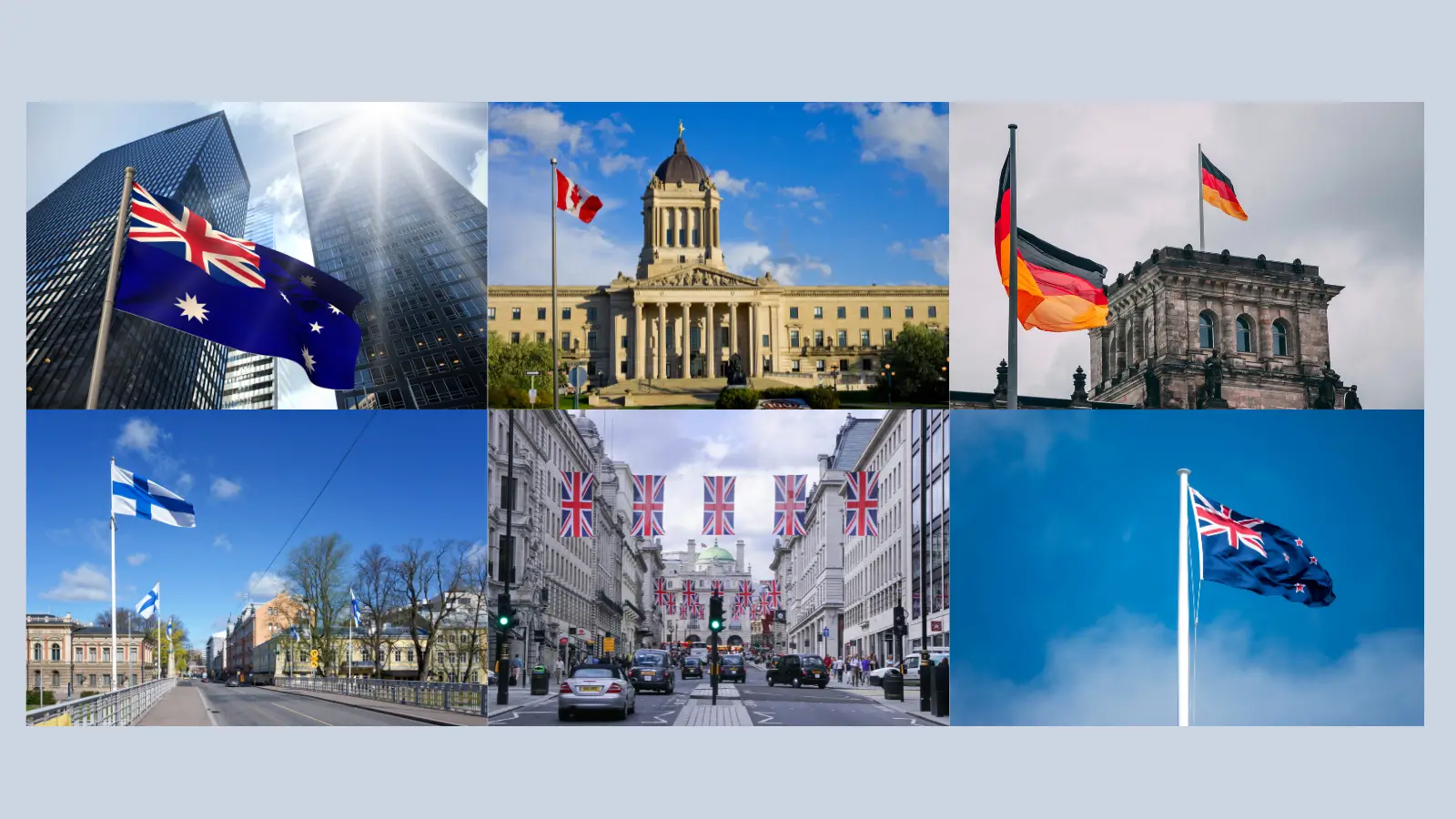

6 Countries Where You Can Study Abroad With Your Family in 2025
Table of Contents
- Introduction: Why Studying Abroad With Your Family Matters
- Essential Requirements for Family Student Visas (Universal Guidelines)
- Financial Requirements and Proof of Funds
- Documentation Checklist for Dependents
- Visa Application Timeline and Common Pitfalls
- Top 6 Family-Friendly Study Destinations
- 1. Australia – Flexible Student Visa and Family Options
- 2. Canada – Open Work Permit and Updated Rules 2025
- 3. Germany – Family Reunion Visa and Free Education
- 4. New Zealand – Best for Children’s Education
- 5. Finland – Strong Family Support and Safety
- 6. United Kingdom – Postgraduate Focus
- Comparison of Countries for Studying Abroad With Family
- FAQs About Studying Abroad With Your Family
- Conclusion: Choosing the Best Country for Your Family
- Call to Action
Introduction: Why Studying Abroad With Your Family Matters {#introduction}
Choosing the best countries to study abroad with your family opens doors to transformative educational experiences that benefit every family member. In 2025, international education has evolved beyond individual pursuits to encompass comprehensive family migration strategies that support long-term career and lifestyle goals.
Emotional and Practical Advantages of Family Study Abroad
Studying abroad with family eliminates the emotional strain of long-distance relationships and separation anxiety. Children maintain stability with both parents present, while spouses can actively participate in the international experience rather than managing households alone across continents.
The practical benefits are equally compelling. Two-parent households abroad provide better childcare flexibility, allowing both parents to focus on studies and career development. Emergency situations become more manageable with both parents present, and cultural adaptation occurs more naturally when families navigate challenges together.
Financial Benefits You Might Not Expect
Contrary to popular belief, studying abroad with family can be more economical than maintaining separate households. Shared accommodation costs, family health insurance plans, and the ability for spouses to work often offset the additional visa expenses and living costs.
The 6 Best Family-Friendly Destinations for 2025
This guide examines Australia, Canada, Germany, New Zealand, Finland, and the United Kingdom—countries that have proven track records of supporting international student families. Each destination offers unique advantages, from unlimited spouse work rights to world-class free education for children.
Recent policy changes in 2025 have made some destinations more attractive while introducing new restrictions in others. Understanding these updates is crucial for making informed decisions about your family’s international education journey.
Essential Requirements for Family Student Visas (Universal Guidelines) {#essential-requirements}
Financial Requirements and Proof of Funds {#financial-requirements}
2025 Financial Requirement Updates
Most countries have increased their financial requirements for international student families in 2025. These updates reflect rising living costs and ensure families can genuinely support themselves without becoming dependent on social services.
Australia now requires proof of AUD $29,710 annually for the primary applicant, plus AUD $10,394 for spouses and AUD $4,449 per dependent child. These amounts represent significant increases from 2024 levels and must be demonstrated through bank statements covering 3-6 months.
Acceptable Proof of Funds Documentation
Financial evidence must come from verifiable sources and demonstrate sustained access to required amounts. Bank statements alone are often insufficient—successful applications typically combine multiple funding sources.
Essential Financial Documents:
- Bank statements (minimum 6 months for most countries)
- Education loan approval letters with disbursement schedules
- Scholarship award letters with payment terms
- Property valuations and sale documents
- Investment portfolio statements
- Sponsor affidavits with income tax returns
- Employment salary certificates and contract letters
Pro Tip for Financial Planning: Maintain funds in easily accessible accounts rather than fixed deposits. Some countries require proof that funds can be accessed within specific timeframes, making liquid savings accounts preferable to long-term investments.
Documentation Checklist for Dependents {#documentation-checklist}
Critical Documents for Spouse Applications
Spouse visa applications require extensive relationship evidence beyond basic marriage certificates. Immigration authorities scrutinize relationships carefully to prevent visa fraud, making comprehensive documentation essential.
Spouse Documentation Checklist:
- Marriage certificate (apostilled and translated)
- Joint bank account statements (minimum 12 months)
- Joint property ownership documents
- Shared utility bills and lease agreements
- Wedding photographs and ceremony documentation
- Correspondence evidence (emails, messages, letters)
- Travel history together (passport stamps, tickets)
Children’s Documentation Requirements
Dependent children applications involve additional complexity, particularly for blended families or situations involving only one biological parent traveling.
Children’s Essential Documents:
- Birth certificates (apostilled and translated)
- Custody orders (if applicable)
- Consent letters from non-traveling parents
- Immunization records (country-specific requirements)
- Academic transcripts from current schools
- Medical examination reports
- Proof of dependency (financial support evidence)
Document Authentication Process
Most countries require document authentication through apostille or embassy legalization processes. These procedures can take 4-8 weeks, making early preparation crucial for meeting application deadlines.
Start document collection at least 6 months before your intended application date. Some documents have validity periods, so timing is critical to ensure all materials remain current throughout the application process.
Visa Application Timeline and Common Pitfalls {#visa-timeline}
2025 Processing Time Reality Check
Family student visa processing times have increased significantly in 2025 due to higher application volumes and enhanced security screening processes. Standard processing now takes 25% longer than individual applications.
Current Processing Timeframes:
- Australia: 6-16 weeks (increased from 4-12 weeks in 2024)
- Canada: 8-20 weeks depending on country of application
- Germany: 6-12 weeks for family reunion visas
- New Zealand: 6-12 weeks for standard applications
- Finland: 4-8 weeks (fastest processing)
- United Kingdom: 3-8 weeks for priority applications
The 5 Most Common Application Mistakes
- Insufficient Financial Documentation: Many families underestimate the depth of financial evidence required, submitting minimal bank statements without supporting documentation.
- Incomplete Medical Examinations: Each family member requires specific medical examinations, but requirements vary by country and age. Missing examinations cause significant delays.
- Inadequate Relationship Proof: Immigration officers scrutinize family relationships carefully. Insufficient evidence of genuine relationships leads to application refusals.
- Language Proficiency Oversights: Some countries require English proficiency evidence for spouse visa applications, even when the primary student meets language requirements.
- Timeline Miscalculations: Families often underestimate the time required for document collection, authentication, and processing, leading to rushed applications with errors.
Strategic Application Planning
Submit applications during off-peak periods when possible. January-March and August-October represent peak application seasons with longer processing times and higher rejection rates due to rushed applications.
Top 6 Family-Friendly Study Destinations {#top-destinations}
1. Australia – Flexible Student Visa and Family Options {#australia}
Major 2025 Policy Changes
Australia has implemented significant changes to its Student Visa Subclass 500 program in 2025. Starting January 1, 2025, Australia put a cap on international students at 270,000, and from July 2025, the base application fee increased from AUD $1,600 to AUD $2,000 per application—a 25% rise.
Updated Student Visa Subclass 500 Details
The Australian student visa system continues to offer excellent family support despite recent changes. Starting January 2025, all onshore Australia student visa applications require a Confirmation of Enrolment (CoE), ensuring students have genuine commitment to their education.
Spouse Work Rights – Updated 2025 Rules
Australia maintains its generous spouse work rights policies, making it one of the best countries to study abroad with your family:
- Undergraduate students: Spouses can work up to 48 hours per fortnight
- Postgraduate students: Unlimited work hours for spouses
- Master’s by research and PhD: Unlimited work rights from enrollment commencement
These work rights provide substantial financial flexibility. Average Australian wages allow spouse income to significantly offset family living expenses, making Australia financially attractive despite higher visa fees.
Children’s Schooling and Healthcare
Australian public schools welcome international students’ children at subsidized rates. School fees range from AUD $4,000-8,000 annually per child—substantially less than international student rates.
Key Benefits for Children:
- Subsidized public school access
- Comprehensive Overseas Student Health Cover (OSHC)
- Access to extracurricular activities and sports programs
- Multicultural learning environments in major cities
2025 Cost Overview for Families
| Expense Category | Annual Cost (AUD) | USD Equivalent |
|---|---|---|
| Primary student living costs | $25,000-30,000 | $16,500-19,800 |
| Spouse additional costs | $8,000-12,000 | $5,280-7,920 |
| Per dependent child | $4,000-6,000 | $2,640-3,960 |
| Public schooling per child | $4,000-8,000 | $2,640-5,280 |
| Family health insurance | $2,500-4,000 | $1,650-2,640 |
Tips for Australian Family Applications
Focus on demonstrating genuine student intent under the new Genuine Student (GS) requirement that replaced the Genuine Temporary Entrant (GTE) requirement in March 2024. Emphasize educational goals, career development plans, and family integration strategies.
Australian visa processing prioritizes complete applications with comprehensive documentation. Prepare for longer processing times and higher costs, but recognize Australia’s excellent post-graduation work opportunities and permanent residency pathways.
2. Canada – Open Work Permit and Updated Rules 2025 {#canada}
Critical 2025 Policy Changes
Canada implemented major restrictions to family open work permits effective January 21, 2025. Only spouses of certain international students enrolled in specific programs will be eligible for family open work permits, and dependent children of foreign workers will no longer be eligible.
New Eligibility Requirements for Spouse Work Permits
Under the new rules, open work permits for spouses are now restricted to those enrolled in Master’s programs lasting 16 months or longer, doctoral programs, and specific professional programs including medicine, veterinary medicine, and law.
Programs Qualifying for Spouse Work Permits:
- Master’s degrees (minimum 16 months duration)
- Doctoral (PhD) programs
- Professional programs: Medicine, dentistry, veterinary medicine, law
- Select programs in natural and applied sciences
- Specific skilled trades programs
Provincial Differences and Benefits
Each Canadian province offers unique advantages for international student families. Quebec provides subsidized daycare at CAD $8.50 per day, while Ontario offers extensive international community support services.
Key Provincial Highlights:
- Ontario: Largest international student communities, diverse employment opportunities
- British Columbia: Technology sector opportunities, mild climate
- Quebec: French language immersion, affordable childcare
- Alberta: Strong economy, family-friendly communities
- Nova Scotia: Lower cost of living, welcoming communities
Master’s, Doctoral, and Professional Program Requirements
The 2025 restrictions significantly limit spouse work authorization, making program selection crucial for families. Choose longer-duration master’s programs or doctoral studies to ensure spouse work eligibility.
Professional programs in healthcare and law continue to qualify for spouse work permits, but admission to these programs is highly competitive and requires specific prerequisite education.
Updated Application Strategy
Focus applications on qualifying programs while demonstrating genuine educational intent. Immigration authorities scrutinize applications more carefully following the policy changes, making comprehensive documentation essential.
Annual Family Costs in Canada (2025)
| Expense Category | Annual Cost (CAD) | USD Equivalent |
|---|---|---|
| Student living expenses | $18,000-25,000 | $13,320-18,500 |
| Spouse additional costs | $8,000-15,000 | $5,920-11,100 |
| Per dependent child | $5,000-8,000 | $3,700-5,920 |
| Public schooling | Free (K-12) | Free |
| Healthcare coverage | Varies by province | $0-2,500 |
3. Germany – Family Reunion Visa and Free Education {#germany}
Family Reunion Visa Process
Germany offers one of the most straightforward family reunion visa processes for international students. Accompanying family members need to apply for a family reunification visa at the German embassy or consulate in their home country.
Application Steps from Home Country:
- Primary Student Visa Approval: Obtain student visa approval and university acceptance
- Gather Family Documentation: Collect marriage certificates, birth certificates, financial proof
- Submit Family Applications: Apply at German embassy/consulate simultaneously
- Attend Visa Interviews: Family members attend individual interviews
- Receive Visa Decisions: Processing typically takes 6-12 weeks
Spouse Unlimited Work Rights
German family reunion visas include unlimited work authorization for spouses. No work hour restrictions apply, allowing full-time employment in any sector without additional permits.
Employment Opportunities:
- Engineering and technology sectors
- Healthcare and medical services
- Education and research positions
- Skilled trades and crafts
- Service and hospitality industries
Children’s Free Public Education
Germany provides completely free public education from kindergarten through university. This includes textbooks, materials, and often school meals, representing substantial cost savings for international families.
Educational System Benefits:
- Free education from age 3 through university
- High-quality STEM education programs
- Multilingual learning opportunities
- Excellent vocational training pathways
- Strong university preparation programs
Cost-Effectiveness for Families
Germany offers exceptional value for international student families. Free education, reasonable living costs, and unlimited spouse work rights create favorable financial conditions.
Monthly Family Living Costs (EUR)
| Expense Category | Monthly Cost (EUR) | USD Equivalent |
|---|---|---|
| Housing (family) | €800-1,500 | $880-1,650 |
| Food and necessities | €600-800 | $660-880 |
| Transportation | €200-300 | $220-330 |
| Insurance and utilities | €300-450 | $330-495 |
| Total Monthly | €1,900-3,050 | $2,090-3,355 |
Practical Tips for German Applications
Learn basic German language skills before arrival. While many Germans speak English, basic German knowledge demonstrates integration commitment and improves daily life experiences.
Research specific city requirements, as some German states have additional documentation requirements for family reunion visas. Bavaria and Baden-Württemberg often have more detailed application processes.
4. New Zealand – Best for Children’s Education {#new-zealand}
Student Visa Provisions for Family
New Zealand’s student visa system prioritizes family welfare and children’s education. The country treats dependent children of international students as domestic students for educational purposes, creating significant cost savings.
Partner of Worker Work Visa Benefits
Spouses of international students qualify for Partner of Worker Work Visas with unlimited work rights. These visas also allow spouse business establishment and entrepreneurship opportunities.
Unique Business Rights for Spouses:
- Unlimited employment authorization
- Business ownership and operation rights
- Investment and entrepreneurship opportunities
- Professional licensing eligibility
- Access to business development support services
Children Treated as Domestic Students
New Zealand’s domestic student treatment for dependents provides exceptional value. Children pay domestic fees for primary, secondary, and tertiary education—a significant advantage over other destinations.
Educational Advantages:
- Domestic tuition rates for all education levels
- World-class curriculum emphasizing critical thinking
- Strong outdoor education and environmental awareness programs
- Small class sizes and individualized attention
- Excellent preparation for international universities
Cost of Living Overview
New Zealand’s cost of living varies significantly by region. Auckland and Wellington are expensive, while smaller cities offer more affordable family living options.
Regional Cost Comparison (Annual, NZD)
| Region | Housing | Living Expenses | Total Family Cost |
|---|---|---|---|
| Auckland | $25,000-40,000 | $20,000-30,000 | $45,000-70,000 |
| Wellington | $22,000-35,000 | $18,000-28,000 | $40,000-63,000 |
| Christchurch | $18,000-28,000 | $15,000-25,000 | $33,000-53,000 |
| Smaller cities | $15,000-22,000 | $12,000-20,000 | $27,000-42,000 |
Post-Graduation Pathways
New Zealand’s post-study work visas and Skilled Migrant Category provide clear pathways to permanent residency. The country actively seeks skilled immigrants and offers streamlined processes for international graduates.
Cultural Integration Benefits
New Zealand’s welcoming culture and emphasis on outdoor activities create ideal environments for family integration. The country’s clean, safe environment consistently ranks among the world’s best for raising children.
5. Finland – Strong Family Support and Safety {#finland}
Student Residence Permit for Families
Finland issues residence permits for international student families under unified family-based applications. The primary student receives a study-based permit, while family members receive family tie-based permits with identical validity periods.
Spouse Full-Time Work Rights
Finnish residence permits include unrestricted work authorization for spouses. Finland’s strong economy, particularly in technology, forestry, and education sectors, provides excellent employment opportunities.
Key Employment Sectors:
- Information technology and software development
- Engineering and manufacturing
- Healthcare and social services
- Education and research
- Forestry and environmental sciences
World-Class Education System for Children
Finland’s education system consistently ranks #1 globally, emphasizing creativity, critical thinking, and student welfare over standardized testing.
Finnish Education Advantages:
- No standardized tests until age 16
- Play-based learning in early years
- Emphasis on creativity and problem-solving
- Free education including meals and materials
- Excellent teacher training and small class sizes
Practical Tips for Family Adaptation in Finland
Finnish culture values work-life balance, making it ideal for international families. The country’s extensive social services and family support systems ease the transition for newcomers.
Seasonal Adaptation Strategies:
- Embrace winter activities like skiing and ice skating
- Invest in proper winter clothing for the entire family
- Utilize Finland’s excellent public libraries and cultural centers
- Join international family communities for support
- Take advantage of summer’s long daylight hours for outdoor activities
Monthly Family Living Costs (EUR)
| Expense Category | Monthly Cost (EUR) | USD Equivalent |
|---|---|---|
| Housing (3-bedroom) | €700-1,200 | $770-1,320 |
| Food and groceries | €500-700 | $550-770 |
| Childcare (subsidized) | €300-400 | $330-440 |
| Transportation | €100-200 | $110-220 |
| Utilities and insurance | €200-300 | $220-330 |
| Total Monthly | €1,800-2,800 | $1,980-3,080 |
Pathway to EU Residency
Finland’s continuous residence pathway leads to permanent residency and EU citizenship. The country’s EU membership provides access to 27 European countries for work, study, and travel.
6. United Kingdom – Postgraduate Focus {#united-kingdom}
Dependents Allowed for Postgraduate Courses >9 Months
UK dependent visa eligibility has become more restrictive, now primarily limited to postgraduate programs exceeding 9 months duration. Undergraduate students generally cannot bring dependents unless studying specific courses.
Eligible Program Categories:
- Master’s degree programs (taught and research)
- PhD and doctoral programs
- Postgraduate diplomas and certificates (>9 months)
- Professional qualification programs
- Some specialized undergraduate programs (medicine, veterinary science)
Work Rights for Spouse and Children’s Schooling
UK dependent visas allow spouse employment up to 20 hours per week during study periods and unlimited hours during official academic breaks. While limited, this provides meaningful income opportunities for families.
Children’s Education Access:
- Public school enrollment at international rates
- Some fee reductions for PhD student families
- Access to comprehensive NHS healthcare services
- Strong UK education system with global recognition
Recent Visa Rule Updates
The UK has tightened financial requirements and enhanced scrutiny of dependent applications in 2025. Applications require more comprehensive financial evidence and stricter relationship documentation.
Enhanced Requirements Include:
- Higher income thresholds for financial support
- More detailed relationship evidence
- Comprehensive health insurance coverage
- Enhanced English language requirements (in some cases)
- Stricter genuine student assessments
Tips for Maximizing UK Approval Chances
Focus on demonstrating genuine educational intent and comprehensive financial capacity. UK immigration authorities carefully scrutinize applications, making thorough preparation essential.
Application Success Strategies:
- Submit applications well before deadlines
- Provide extensive financial documentation
- Include detailed study plans and career objectives
- Demonstrate strong ties to home country
- Prepare for possible visa interviews
Annual Family Expenses (GBP)
| Expense Category | Annual Cost (GBP) | USD Equivalent |
|---|---|---|
| Student living expenses | £12,000-20,000 | $15,000-25,000 |
| Spouse additional costs | £8,000-15,000 | $10,000-18,750 |
| Per dependent child | £6,000-10,000 | $7,500-12,500 |
| Children’s schooling | £10,000-25,000 per child | $12,500-31,250 |
| NHS healthcare surcharge | £624 per person per year | $780 |
Post-Graduation Options
The UK’s Graduate Route visa allows international students to remain for two years (three years for PhD graduates) after completing studies, providing valuable time for career development and family settlement.
Comparison of Countries for Studying Abroad With Family {#comparison}
| Country | Visa Difficulty | Processing Time | Spouse Work Rights | Children’s Education | Post-Graduation Options | Annual Family Costs |
|---|---|---|---|---|---|---|
| Australia | Moderate-High | 6-16 weeks | Unlimited (postgrad) / 48h fortnight (undergrad) | Subsidized public schools | Strong PR pathways via SkillSelect | $25,000-40,000 USD |
| Canada | High (2025 changes) | 8-20 weeks | Masters 16+ months only | Free public education (K-12) | Express Entry system | $20,000-35,000 USD |
| Germany | Low-Moderate | 6-12 weeks | Unlimited work rights | Free public education (all levels) | EU residence pathways | $18,000-30,000 USD |
| New Zealand | Moderate | 6-12 weeks | Unlimited work rights + business options | Domestic student rates (all levels) | Skilled migrant category | $22,000-38,000 USD |
| Finland | Low | 4-8 weeks | Unlimited work rights | Free world-class education | EU residence pathways | $20,000-32,000 USD |
| United Kingdom | High | 3-8 weeks | 20 hours/week only | International school fees | 2-3 year Graduate Route | $28,000-45,000 USD |
Key Decision Factors:
🏆 Best Overall Value: Germany and Finland (free education + unlimited spouse work rights)
💰 Most Affordable: Germany (lowest total family costs with excellent benefits)
🎓 Best for Children: Finland and New Zealand (top-rated education systems)
💼 Best Work Opportunities: Australia, Germany, New Zealand (unlimited spouse work rights)
🛣️ Best PR Pathways: Australia and Canada (established skilled migration programs)
📋 Easiest Visa Process: Finland and Germany (lower requirements, faster processing)
FAQs About Studying Abroad With Your Family {#faqs}
1. What are the new 2025 changes affecting family student visas?
Major 2025 changes include Canada restricting spouse work permits to master’s programs 16+ months, Australia increasing visa fees by 25% to AUD $2,000, and enhanced financial requirements across most countries. The UK has tightened dependent eligibility, while Germany and Finland maintain stable, family-friendly policies.
2. Can I bring my family on any type of student visa in 2025?
Eligibility varies significantly by country and program type. Canada now restricts family visas to qualifying master’s/doctoral programs only. Australia allows families for most degree programs. Germany and Finland welcome families for any degree-level program. The UK limits dependents to postgraduate courses exceeding 9 months.
3. How much money do I need to prove for my family’s visa application?
Financial requirements have increased in 2025: Australia requires AUD $44,553 for a family of four, Canada needs CAD $25,000-35,000 depending on province, Germany requires EUR €11,208 per family member, New Zealand needs NZD $20,000 base plus dependents, Finland requires EUR €12,600 per person, and the UK demands GBP £18,000+ for families.
4. What work rights do spouses have in different countries?
Spouse work rights vary dramatically in 2025: Germany, Finland, and New Zealand offer unlimited work hours. Australia provides unlimited hours for postgraduate student spouses but limits undergraduate student spouses to 48 hours fortnightly. Canada restricts spouse work permits to qualifying programs only. The UK limits spouse work to 20 hours weekly.
5. How much do children’s education costs vary between countries?
Education costs range from free to very expensive: Germany and Finland provide completely free public education including materials. Canada offers free K-12 public education. New Zealand treats dependents as domestic students for all education levels. Australia subsidizes public school fees to AUD $4,000-8,000 annually. The UK charges full international rates of GBP £10,000-25,000 per child annually.
6. Which countries offer the fastest visa processing for families?
Processing times in 2025: Finland processes fastest at 4-8 weeks. Germany takes 6-12 weeks. New Zealand and the UK process in 6-12 weeks and 3-8 weeks respectively. Australia now takes 6-16 weeks due to increased applications. Canada has the longest processing at 8-20 weeks, varying by country of application.
7. What documents do we need for family visa applications?
Essential documents include apostilled marriage certificates and birth certificates, 6 months of bank statements showing required funds, medical examinations for all family members, police clearances from all countries lived in for 12+ months, comprehensive health insurance, academic transcripts for children, and extensive relationship evidence for spouses.
8. Can we apply for permanent residency after studying with family?
All featured countries offer permanent residency pathways. Australia’s SkillSelect system prioritizes graduates with local experience. Canada’s Express Entry system favors candidates with Canadian education/work experience. Germany offers EU permanent residency after 5 years continuous residence. New Zealand’s Skilled Migrant Category welcomes graduates. Finland and the UK provide respective permanent residency pathways.
9. What happens if my spouse loses their job while we’re studying abroad?
Spouse work authorization typically remains valid regardless of employment status, provided the primary student maintains valid status. However, families must maintain financial capacity to support themselves. Consider emergency funds and job placement services offered by universities and local communities.
10. How do healthcare costs affect family budgets abroad?
Healthcare approaches vary: Australia requires mandatory OSHC costing AUD $2,500-4,000 annually for families. Canada provides provincial healthcare after 3-month waiting periods. Germany includes families in statutory insurance systems. New Zealand provides access to public healthcare services. Finland offers comprehensive healthcare coverage. The UK requires NHS surcharge payments of GBP £624 per person annually.
11. Can children attend university at domestic rates after we immigrate?
Domestic tuition eligibility varies by country and residency duration. Germany and Finland provide free university education immediately. New Zealand treats long-term resident children as domestic students. Australia, Canada, and the UK typically require permanent residency or specific residency periods before domestic tuition eligibility.
12. What support services exist for international student families?
Universities typically offer international student services including family orientation programs, childcare assistance, spouse employment workshops, cultural integration activities, and emergency support services. Many cities have international community centers, playgroups for children, and spouse networking organizations.
13. How do we handle medical emergencies abroad with children?
Establish care immediately upon arrival by registering with local healthcare systems, maintaining comprehensive insurance coverage, understanding emergency procedures and contact numbers, keeping medical records accessible, and registering with your home country’s embassy for emergency assistance.
14. Are there scholarships specifically for international student families?
Some universities and organizations offer family-specific funding. Research institutional family scholarships, government family support programs, international organization grants supporting family education, and employer-sponsored family education programs. Competition is intense, so apply early with comprehensive documentation.
15. What cultural challenges should families expect?
Common challenges include language barriers affecting daily activities and children’s school integration, different educational systems and teaching methods, social customs and friendship-building approaches, climate adaptation and seasonal mood changes, and maintaining cultural identity while integrating into new communities. Preparation and open communication help navigate these transitions.
16. How do currency fluctuations affect our family budget?
Exchange rate changes can impact budgets by 10-20% or more. Strategies include opening local bank accounts upon arrival, budgeting with 15% currency fluctuation buffers, using international student banking packages, considering forward currency contracts for large expenses, and maintaining some funds in stable currencies.
17. Can grandparents visit us easily while we’re studying abroad?
Visitor visa requirements vary by country and grandparents’ nationality. Most countries offer tourist/visitor visas for extended family visits. Ensure you can provide invitation letters, accommodation proof, and financial support evidence if required. Some countries offer super visas for longer-term visits.
18. What if our family circumstances change during studies (divorce, new baby)?
Major changes require immediate immigration consultation. Divorce may affect spouse visa status and require separate applications. New children need to be added to family applications promptly. Marriage changes require visa amendments. Always inform immigration authorities and universities of significant family changes.
19. How do we maintain our home country connections while abroad?
Technology makes connections easier: budget for international communication services, plan regular home visits during school holidays, maintain cultural traditions and celebrations, help children understand their multicultural identity, and consider joining cultural associations from your home country in your new location.
20. What should we do if our family visa application is rejected?
Options include understanding specific rejection reasons from immigration authorities, appealing the decision if grounds exist, reapplying with additional documentation addressing rejection reasons, seeking professional immigration legal advice, and considering alternative countries or program options that might be more suitable for your family situation.
Conclusion: Choosing the Best Country for Your Family {#conclusion}
Selecting the best countries to study abroad with your family in 2025 requires careful consideration of recent policy changes, individual family priorities, and long-term goals. The landscape has shifted significantly, with some destinations becoming more restrictive while others maintain welcoming family-friendly policies.
Top Recommendations by Family Priority:
For Unlimited Spouse Work Rights: Germany, Finland, and New Zealand remain the gold standard, offering unrestricted employment authorization that enables families to achieve financial independence and career growth simultaneously.
For Children’s Education Excellence: Finland and New Zealand provide world-class education systems that emphasize creativity and critical thinking, while Germany offers the additional benefit of completely free education through university level.
For Overall Affordability: Germany stands out as the most cost-effective option, combining free education, reasonable living costs, and excellent spouse work rights. Finland follows closely with similar benefits and faster visa processing.
For Permanent Residency Pathways: Australia and Canada continue to offer the most established skilled migration programs, though Canada’s 2025 restrictions make qualification more challenging for families.
2025 Policy Impact Summary
The year 2025 has brought significant changes that affect family planning decisions. Canada’s restriction of spouse work permits to qualifying master’s programs eliminates many previously viable options. Australia’s visa fee increases make it more expensive but maintain excellent family benefits for those who can afford the higher costs.
Germany and Finland have emerged as increasingly attractive alternatives, offering stable policies, comprehensive family support, and excellent educational opportunities without the restrictions implemented elsewhere.
Making Your Decision
Consider your family’s specific circumstances when choosing among these destinations. Families with young children should prioritize educational quality and safety, making Finland and New Zealand top choices. Career-focused families benefit from unlimited spouse work rights available in Germany, Finland, and New Zealand.
Budget-conscious families will find Germany offers the best value proposition with free education and reasonable living costs. Those seeking English-speaking environments should focus on Australia, New Zealand, and Canada, though Canada’s new restrictions require careful program selection.
Timeline for Success
Start planning at least 12-18 months before your intended departure date. The 2025 policy changes have increased processing times and documentation requirements, making early preparation more critical than ever.
Successful family applications require coordinated effort, comprehensive documentation, and realistic financial planning. The investment in international education pays dividends through expanded career opportunities, global perspectives, and invaluable cultural experiences for every family member.
Call to Action {#call-to-action}
Transform your family’s educational dreams into reality with strategic planning and informed decision-making. The best countries to study abroad with your family offer life-changing opportunities that extend far beyond academic achievement.
Your Next Steps Start Today:
1. Immediate Research Actions (This Week):
- Compare specific university programs in your field across these six countries
- Calculate detailed family budgets using the cost breakdowns provided
- Research current visa requirements on official government websites
- Connect with university international offices to discuss family support services
2. Financial Planning (Next 2 Weeks):
- Assess current financial capacity against country requirements
- Explore education loan options for international study
- Research scholarship opportunities for international families
- Consider international banking and money transfer options
3. Documentation Preparation (Next Month):
- Gather essential family documents for authentication
- Schedule medical examinations for all family members
- Obtain police clearance certificates from relevant countries
- Prepare comprehensive relationship evidence for spouse applications
Official Government Immigration Resources:
🇦🇺 Australia: Department of Home Affairs – Student Visa Subclass 500
🇨🇦 Canada: Immigration, Refugees and Citizenship Canada
🇩🇪 Germany: Federal Foreign Office – Study Visas
🇳🇿 New Zealand: Immigration New Zealand – Student Visas
🇫🇮 Finland: Finnish Immigration Service
🇬🇧 United Kingdom: UK Visas and Immigration
University and Education Resources:
- Study in Australia: Australian Government Official Portal
- EduCanada: Official Canadian Education Portal
- Study in Germany: DAAD Official Information
- Education New Zealand: Official Study Portal
- Study in Finland: Official Education Portal
- Study UK: British Council Education
Professional Support Services:
Consider consulting with registered immigration advisers or education consultants who specialize in family applications. Many universities offer pre-application consultations specifically for international families.
Financial Planning Resources:
- Compare international education loans from multiple providers
- Research currency exchange services for ongoing money transfers
- Investigate international health insurance options for comprehensive family coverage
- Explore accommodation options through university housing and family-friendly rental services
Family Preparation Strategies:
Begin cultural preparation by learning basic language skills for your chosen destination. Connect with online communities of international families in your target countries. Prepare children for the transition through age-appropriate discussions about international living.
Final Encouragement
Thousands of families successfully navigate international education each year, creating opportunities for academic achievement, career advancement, and cultural enrichment that benefit entire families for generations.
The policy changes in 2025 make careful planning more important than ever, but the rewards of international family education remain extraordinary. Choose your destination wisely, prepare thoroughly, and embrace the adventure that awaits your family in one of these exceptional study abroad destinations.
Your family’s international education journey begins with the first step. Take action today to transform your dreams into a carefully planned, achievable reality.
Start your research now, and in 12-18 months, your family could be embarking on the educational adventure of a lifetime in one of the world’s most family-friendly study destinations.
Dive Deeper into the World of Gluxal Articles :
Unlocking the Best Time to Find Cheap Flights: Your Ultimate Guide 2025
Travel Free: Unlocking the Secrets to Affordable and Exciting Travel Experiences
The 5 Best Websites to Find the Cheapest Flight Tickets in 2025
The best island to go to in the caribbean: A Comprehensive Guide
The World’s Best 10 Cities for 2025: A Comprehensive Travel Guide
The Best Islands in the World: A Paradise Beyond Imagination
Last updated: August 2025