



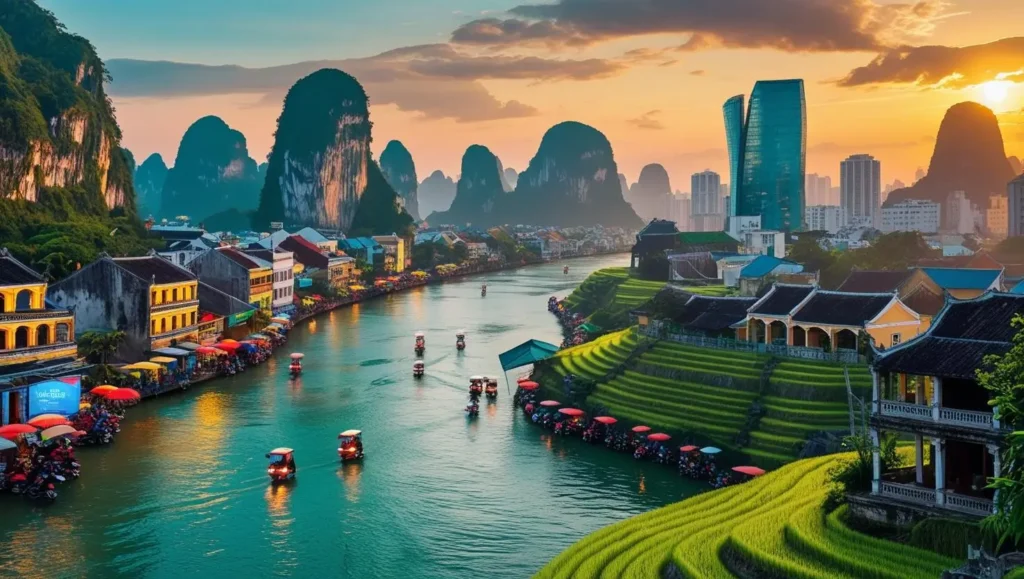
Is it safe to travel to Vietnam right now? This question echoes through countless travel forums as adventurous souls dream of cruising through Ha Long Bay’s emerald waters, wandering the lantern-lit ancient streets of Hoi An, and losing themselves in the electric energy of Ho Chi Minh City’s bustling markets. The answer might surprise you: Vietnam has emerged as one of Southeast Asia’s safest and most rewarding destinations in 2025.
Picture this: a country where ancient temples sit alongside French colonial architecture, where steaming bowls of pho cost less than your morning coffee, and where genuine smiles greet you at every turn. Vietnam isn’t just recovering from its turbulent past—it’s thriving, welcoming over 18 million international visitors annually and earning recognition as one of the world’s most peaceful nations.
From the misty mountains of Sapa to the floating markets of the Mekong Delta, Vietnam offers experiences that digital nomads, students, expats, and curious travelers have been secretly sharing in whispered recommendations. But here’s what most guidebooks won’t tell you: the real magic happens when you venture beyond the well-trodden tourist trails.
Table of Contents
- Is It Safe to Travel to Vietnam?
- How Much Does It Cost to Travel to Vietnam?
- Hidden Gems: Under Vietnam Travelers’ Radar
- Cultural and Historical Insights into Vietnam
- One-Week Optimized Vietnam Itinerary
- Transportation Options in Vietnam
- Frequently Asked Questions (FAQs)
Is It Safe to Travel to Vietnam?
Is Vietnam safe to visit in 2025? The resounding answer is yes. The State Department gives Vietnam its top safety rating – a level-1, or “exercise normal precautions.” Today, Vietnam is one of the safest countries in the world to travel to. In 1999, UNESCO awarded the title “City for Peace” to Hanoi, making it the only Asian capital to receive this honor.
Political Stability and Crime Rates
Vietnam enjoys remarkable political stability and boasts some of the lowest violent crime rates in Southeast Asia. Its main source of income is tourism, so the tourists’ safety is their number one concern. Street crime exists primarily in major cities like Hanoi and Ho Chi Minh City, but it’s typically limited to petty theft and pickpocketing.
Common tourist scams to watch for:
- Taxi meter manipulation (use Grab instead)
- Overcharging at tourist restaurants
- Fake tour operators offering “once-in-a-lifetime” deals
- Currency exchange scams with similar-looking bills
Solo Female Travel Tips
Is Vietnam safe for solo female travelers? Absolutely. Vietnam consistently ranks as one of Asia’s most female-friendly destinations. Here’s how to stay safe and respectful:
Dress codes and cultural sensitivity:
- Cover shoulders and knees when visiting temples
- Avoid revealing clothing in rural areas
- Pack a light scarf for quick temple visits
Safe nightlife areas:
- Hanoi’s Old Quarter (well-lit, heavily patrolled)
- Ho Chi Minh City’s District 1 (tourist police presence)
- Hoi An Ancient Town (pedestrian-friendly)
Emergency Information
Keep these essential numbers saved in your phone:
- Emergency services: 113 (police), 114 (fire), 115 (ambulance)
- Tourist hotline: 1800 1560
Travel insurance recommendations: Always purchase comprehensive travel insurance covering medical evacuation. Vietnam’s healthcare system varies significantly between cities and rural areas. International hospitals in Hanoi and Ho Chi Minh City meet Western standards, but rural areas may require medical evacuation.
How Much Does It Cost to Travel to Vietnam?
How much does it cost to travel to Vietnam in 2025? A typical traveler spends $65 (d1,698,812) per day on a trip to Vietnam. However, your actual costs depend heavily on your travel style and chosen destinations.
Complete Cost Breakdown
International Flights: A round-trip flight between the US and Vietnam costing under $600 is considered cheap, as international flights typically cost between $700 and $1,300 from major US cities. Book 2-3 months in advance for the best deals.
Accommodation by City (per night):
Hanoi:
- Budget hostels: $8-15
- Mid-range hotels: $25-50
- Luxury hotels: $80-200
Da Nang:
- Budget guesthouses: $10-18
- Mid-range resorts: $30-60
- Luxury beachfront: $100-300
Ho Chi Minh City:
- Budget hostels: $10-20
- Mid-range hotels: $30-55
- Luxury accommodations: $90-250
Food Costs: Street Food vs. Restaurants
Street food (the real Vietnam experience):
- Pho: $1-3 per bowl
- Banh mi: $0.50-2
- Fresh spring rolls: $1-2
- Local beer: $0.75-1.50
Restaurant dining:
- Local restaurants: $5-12 per meal
- Tourist restaurants: $8-20 per meal
- Fine dining: $50 to $100 per meal, with drinks costing $10 or more
Transportation Costs
- Local buses: $0.30-0.50
- Grab motorcycle: $1-3 for short distances
- Grab car: $3-8 within cities
- Domestic flights: Hanoi to Hue approximately $130, Da Nang to Ho Chi Minh city around $130
Major Excursion Costs
- Ha Long Bay overnight cruise: $80-300 (depending on luxury level)
- Sapa trekking tours: $50-150 (2-3 days)
- Mekong Delta day tours: $25-60
- Guided day tours usually range from $50 to $300
Budget Comparison
Budget travelers: $30 to $50 per day Mid-range travelers: $60–$90 per day Luxury travelers: $150-400+ per day
Most travelers recommend a total budget of around $400 in spending money per two weeks, though most end up spending closer to $530–$660 depending on activities and indulgences.
Hidden Gems: Under Vietnam Travelers’ Radar
While millions flock to Ha Long Bay and Hoi An, savvy travelers are discovering Vietnam’s best-kept secrets. These under-the-radar destinations offer authentic experiences without the crowds.
Phong Nha-Ke Bang National Park
Home to the world’s largest cave system, including the recently discovered Son La Cave. The park offers everything from easy walking tours to multi-day underground expeditions. Adventure seekers can explore caves like Paradise Cave and Dark Cave, while nature lovers will find pristine jungle trekking.
How to get there: Fly to Dong Hoi, then take a 45-minute bus to Phong Nha village.
Ha Giang Loop
This motorcycling paradise winds through Vietnam’s northernmost province, offering dramatic limestone karst landscapes, ethnic minority villages, and some of the country’s most spectacular mountain scenery. The loop typically takes 3-4 days and passes through Dong Van Karst Plateau Geopark.
Best time to visit: September-November for perfect weather and blooming buckwheat flowers.
Con Dao Islands
Once France’s notorious prison colony, Con Dao has transformed into Vietnam’s pristine island paradise. Crystal-clear waters, untouched beaches, and excellent diving make this archipelago perfect for travelers seeking tropical beauty without the crowds.
Unique experiences: Sea turtle nesting season (June-September) and some of Vietnam’s best diving sites.
Ban Gioc Waterfall
Vietnam’s most spectacular waterfall system sits right on the Chinese border. These multi-tiered falls are particularly impressive during the rainy season (May-September) when water flow is at its peak.
Insider tip: Combine your visit with nearby Nguom Ngao Cave for a full day of natural wonders.
Cultural and Historical Insights into Vietnam
Understanding Vietnam’s complex cultural tapestry enhances every travel experience. This is a nation shaped by Chinese influence, French colonialism, American conflict, and its own resilient spirit.
Essential Vietnamese Etiquette
Greeting locals properly:
- Slight bow with hands pressed together (like prayer position)
- “Xin chào” (seen CHOW) works for all situations
- Address older people as “anh/chị” (older brother/sister)
Temple and home behavior:
- Always remove shoes before entering homes or temples
- Never point your feet toward altars or Buddha statues
- Dress modestly with covered shoulders and knees
- Don’t touch people’s heads, especially children
Cultural Stories That Shape Modern Vietnam
The resilience of community: During the difficult years of the 1940s Vietnam, local communities developed incredibly strong bonds that persist today. This explains why Vietnamese people are so welcoming to visitors—hospitality isn’t just cultural, it’s survival instinct transformed into genuine warmth.
Influences from East and West: Walk through any Vietnamese city and you’ll see the beautiful collision of cultures. Chinese-style temples sit next to French colonial villas, while street vendors serve pho with French baguette on the side. This cultural fusion created Vietnam’s unique identity.
Black travelers in Vietnam will find a generally welcoming environment. Vietnam’s focus on respect and hospitality extends to all visitors, and the country’s tourism industry is increasingly international-minded.
Key Festivals and Celebrations
- Tet (Lunar New Year): January/February – The most important celebration
- Mid-Autumn Festival: September/October – Lanterns and moon cakes
- Wandering Souls Day: August – Honoring ancestors
- National Day: September 2 – Independence celebration
One-Week Optimized Vietnam Itinerary
This carefully crafted 7-day journey maximizes your Vietnam experience while minimizing travel time and tourist trap mistakes.
Days 1-2: Hanoi & Ha Long Bay
Day 1: Hanoi Immersion
- Morning: Explore the Old Quarter’s 36 ancient streets
- Afternoon: Visit Temple of Literature and Hoa Lo Prison Museum
- Evening: Street food tour in Hanoi’s night markets
- Stay: Budget option in Old Quarter or mid-range near Hoan Kiem Lake
Day 2: Ha Long Bay Adventure
- Early departure for Ha Long Bay (3.5-hour drive)
- Overnight cruise with cave exploration and kayaking
- Sunset dinner on traditional junk boat
Days 3-4: Hoi An & Da Nang
Day 3: Travel to Hoi An
- Morning flight Hanoi to Da Nang (1.5 hours)
- Transfer to Hoi An Ancient Town (45 minutes)
- Afternoon: Walking tour of UNESCO World Heritage sites
- Evening: Lantern festival atmosphere and tailor shopping
Day 4: Hoi An Deep Dive
- Morning: Bicycle tour through rice paddies and villages
- Afternoon: Cooking class and local market visit
- Evening: Beach time at An Bang or Cua Dai Beach
Days 5-7: Ho Chi Minh City & Mekong Delta
Day 5: Ho Chi Minh City Discovery
- Flight from Da Nang (1.5 hours)
- Afternoon: War Remnants Museum and Reunification Palace
- Evening: Rooftop bars and street food in District 1
Day 6: Mekong Delta Expedition
- Full-day tour to Ben Tre or Can Tho
- Boat rides through floating markets
- Visit fruit orchards and local workshops
- Return to Ho Chi Minh City evening
Day 7: Final Explorations
- Morning: Cu Chi Tunnels half-day tour
- Afternoon: Ben Thanh Market shopping and spa treatment
- Evening: Farewell dinner with traditional Vietnamese performance
Transportation Options in Vietnam
Getting around Vietnam efficiently requires understanding the country’s diverse transportation network. Here’s your complete guide to traveling like a local while staying safe and comfortable.
Domestic Flights
Vietnam’s domestic flight network connects all major cities quickly and affordably. VietJet Air, Vietnam Airlines, and Bamboo Airways offer competitive prices, especially when booked in advance.
Key routes and approximate costs:
- Hanoi to Ho Chi Minh City: $50-120
- Da Nang to Phu Quoc: $80-150
- Hanoi to Da Nang: $40-90
Pro tip: Book flights 1-2 months ahead and be flexible with dates for best prices.
Train Travel: The Scenic Route
Vietnam’s railway system offers comfortable overnight journeys with spectacular scenery. The Reunification Express runs the length of the country, while shorter routes connect regional destinations.
Popular train routes:
- Hanoi to Hue: 12-14 hours, $25-60
- Hanoi to Sapa: 8 hours overnight, $20-45
- Hue to Ho Chi Minh City: 18-20 hours, $30-70
Sleeping options: Hard seat (basic), soft seat (reclining), hard sleeper (6-berth), soft sleeper (4-berth), and VIP sleeper (2-berth).
Bus Transportation
Long-distance buses do not meet U.S. safety standards, but they’re affordable and connect virtually every destination. Open-tour buses cater specifically to tourists with air conditioning and English-speaking guides.
Reputable bus companies:
- The Sinh Tourist (tourist-focused)
- Mai Linh Express (local favorite)
- Phuong Trang (FUTA Bus Lines)
Motorbike Rentals: Freedom with Responsibility
Renting a motorbike offers unparalleled freedom to explore Vietnam, but comes with significant risks. Traffic in Vietnam is dangerous, chaotic, and undisciplined. Road conditions are poor; traffic accidents are the leading cause of death, severe injury, and emergency evacuation of foreigners in Vietnam.
Safety requirements:
- International driving permit (technically required)
- Quality helmet (bring your own or buy locally)
- Comprehensive travel insurance covering motorbike accidents
- Never ride at night or during heavy rain
Best regions for motorbike touring:
- Ha Giang Loop (advanced riders only)
- Hoi An countryside (beginner-friendly)
- Da Lat highlands (moderate difficulty)
Ride-Hailing: The Urban Solution
Grab dominates Vietnam’s ride-hailing market and offers the safest, most reliable urban transportation. Available in all major cities, Grab provides both motorcycle (Grab Bike) and car (Grab Car) options.
Grab advantages:
- Fixed pricing (no meter manipulation)
- English-language app
- GPS tracking for safety
- Cashless payment options
Vietnam Travel Map Essentials
Offline navigation apps:
- Maps.me (works without internet)
- Google Maps (download offline areas)
- Grab app (integrated mapping and transportation)
Physical maps: Pick up detailed provincial maps at any bookstore for motorbike touring. Tourist information centers in major cities provide free city maps.
Frequently Asked Questions (FAQs)
Is it safe to travel to Vietnam right now?
Yes, Vietnam maintains a Level 1 travel advisory (“exercise normal precautions”) and is considered one of Southeast Asia’s safest destinations. Political stability, low crime rates, and a tourism-dependent economy ensure visitor safety remains a top priority.
How much does it cost to visit Vietnam?
Budget travelers can expect to spend $30-50 per day, while mid-range travelers typically spend around $65 per day. Luxury travelers may spend $150-400+ daily depending on accommodations and activities.
What is the best time to go to Vietnam?
Vietnam’s climate varies dramatically by region:
- North Vietnam (Hanoi, Sapa): October-April for cool, dry weather
- Central Vietnam (Hoi An, Hue): February-August to avoid monsoons
- South Vietnam (Ho Chi Minh City): December-April for the dry season
Shoulder seasons (April-May, September-October) offer the best balance of good weather and fewer crowds.
Is Vietnam safe for solo female travelers?
Vietnam consistently ranks among Asia’s safest countries for solo female travelers. Local culture emphasizes respect and hospitality, and violent crime against tourists is extremely rare. Basic precautions like avoiding isolated areas at night and dressing modestly at religious sites ensure a safe experience.
Do I need a visa for Vietnam in 2025?
Visa requirements depend on your nationality and length of stay:
- US citizens: Visa required for all stays
- EU citizens: 45-day visa exemption
- Poland, Czech Republic, and Switzerland: New 45-day visa exemption as of March 2025
Most travelers can apply for an e-visa online before departure. Always check current requirements as policies frequently change.
How do I get around Vietnam cheaply?
The most budget-friendly transportation options include:
- Local buses: $0.30-0.50 per ride
- Overnight buses between cities: $10-25
- Grab motorcycle for short distances: $1-3
- Street food instead of tourist restaurants
- Hostels and guesthouses: $8-20 per night
Money-saving tip: Travel during shoulder seasons and book accommodations directly with properties to avoid booking fees.
Conclusion
Vietnam in 2025 stands as a testament to resilience, transformation, and the power of genuine hospitality. Whether you’re seeking budget adventures, cultural immersion, or luxury escapes, this remarkable country delivers experiences that linger long after departure. From the safety of well-traveled routes to the thrill of hidden gems, Vietnam offers something extraordinary for every type of traveler.
The country’s combination of affordability, safety, and authentic experiences makes it an ideal destination for digital nomads establishing temporary bases, students on educational journeys, expats beginning new chapters, and curious travelers seeking their next great adventure.
Vietnam’s charm is timeless—from misty mountains to floating markets, it’s a journey that will stay with you long after you return home. Pack your curiosity, bring your appetite for adventure, and prepare for a country that will surprise you at every turn.